The 5 Best Soft-Shell Rooftop Tents of 2026: Versatility, Comfort, and Trail-Ready Value
Soft-shell rooftop tents have been the backbone of vehicle camping and overlanding for decades. Before molded fiberglass and ABS clamshells dominated the market, canvas and ripstop fabric ruled the roof rack landscape, and they remain a highly relevant choice today. Their fold-out designs, expansive floor plans, and modular nature make them a favorite for travelers who prioritize interior space, customization, and flexible setup options.
This guide explores five standout soft-shell models available today, explains why they excel over certain hard-shell configurations, and details exactly where each one belongs on your next trip.
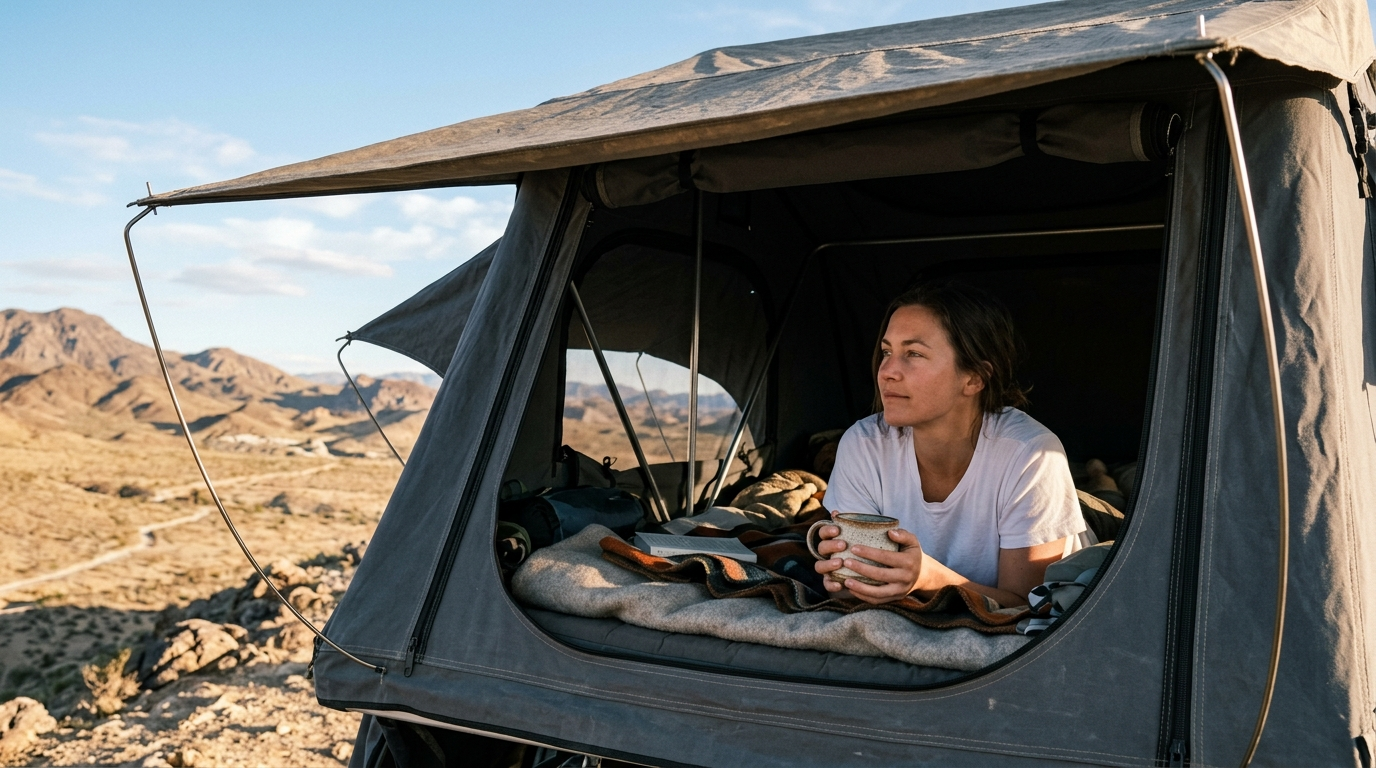
Why Soft-Shell Rooftop Tents Still Dominate
Hard shells are fantastic for speed, but soft-shell tents offer distinct advantages that appeal to a wide range of campers.
Expanded Living Space
Soft shells fold outward rather than upward. This creates a generous, low-profile sleeping area that often feels more spacious inside. The sloping canvas walls also make it easier to move around while changing clothes or organizing gear.
Annex and Accessory Compatibility
Most soft-shell tents feature perimeter channels, reinforced corners, and flat base platforms designed specifically for bolt-on annexes, gear lofts, and awning integrations. If you want to build a fully enclosed ground room beneath your sleeping platform, soft shells are the clear choice.
Superior Breathability and Ventilation
Breathable cotton-poly blends and strategically placed mesh panels allow air to flow naturally. In hot, humid climates or dense forest campsites, soft shells manage condensation better than sealed fiberglass shells, keeping sleepers dry without relying on electric fans.
Lower Entry Weight and Price
Because they rely on fabric and lightweight aluminum poles instead of heavy molded shells and complex strut systems, soft shells often weigh less and cost less. They also sit lower when folded, typically adding only 4 to 6 inches (10 to 15 centimeters) to your roof rack height.
Field Repairability
Ripped canvas can be sewn or patched with simple repair kits on the trail. Broken aluminum poles can be splinted. When a hard-shell fiberglass panel cracks, you usually need a manufacturer replacement. Soft shells are far more forgiving in remote environments.
The 5 Best Soft-Shell Rooftop Tents
1. Yakima SkyRise HD Medium
Type: Wedge Soft-Shell
Sleeps: 2 to 3 adults
Closed Weight: 115 pounds (52 kilograms)
Price Range: $2,400 to $2,600
Why It Stands Out
The SkyRise HD Medium has earned its reputation through bulletproof reliability and thoughtful engineering. It uses a sixty-denier ripstop polyester shell with a three-thousand-millimeter waterproof rating, paired with an aluminum cross-braced base that prevents floor sag. The auto-locking telescoping ladder and removable blackout rainfly make it equally comfortable in summer storms and crisp autumn nights.
Recommended Situation
Ideal for four-season overlanders and highway travelers who camp from spring snow to late fall. The rigid base and tight rainfly seal handle wind and precipitation exceptionally well. Best paired with mid-size SUVs, pickup trucks, or heavy-duty crossovers.
2. Tepui Autana 4
Type: Wedge Soft-Shell with Annex Integration
Sleeps: 4 adults
Closed Weight: 145 pounds (66 kilograms)
Price Range: $1,900 to $2,100
Why It Stands Out
The Autana 4 is built around the concept of a mobile basecamp. It features a massive sleeping footprint, reinforced perimeter channels for quick annex attachment, and dual skylight panels that flood the interior with natural light. The heavy-duty aluminum poles and reinforced stitching handle frequent deployment cycles, while the waterproof mattress stays permanently mounted.
Recommended Situation
Perfect for families, long-stay campers, or anyone who wants to convert their rooftop tent into a full sleeping and living zone. If you frequently camp for three or more days and want an enclosed ground room for cooking, changing, or storing muddy boots and coolers, the Autana 4 is the blueprint.
3. ARB Simpson III
Type: Premium Heavy-Duty Soft-Shell
Sleeps: 3 adults
Closed Weight: 165 pounds (75 kilograms)
Price Range: $3,200 to $3,500
Why It Stands Out
ARB designs the Simpson III for extreme environments. The triple-layer Australian canvas exterior withstands intense UV exposure, heavy coastal salt air, and abrasive desert dust. The internal telescoping frame uses a single-motion hinge system that locks securely without relying on tension straps. Every seam is double-stitched, and the integrated LED light strips provide hands-free illumination after dark.
Recommended Situation
Built for remote expeditions, heavy commercial use, and travelers crossing high-heat deserts or humid coastal regions. If you camp weekly, drive on rough washboard roads, or need a tent that survives years of abuse without fabric degradation, the Simpson III delivers professional-grade durability.
4. OVS TMBK 3-Person
Type: Budget Soft-Shell
Sleeps: 3 adults
Closed Weight: 130 pounds (59 kilograms)
Price Range: $900 to $1,000
Why It Stands Out
The OVS TMBK consistently outperforms its price bracket by including features usually reserved for premium models. It comes standard with a thick memory foam mattress, heavy-duty six-hundred-denier polyester walls, and a simple strap-deployment system that requires no tools. The base platform uses reinforced wood slats that distribute weight evenly, preventing the hollow bounce common in cheaper tents.
Recommended Situation
The undisputed choice for first-time rooftop tent buyers and weekend campers who want elevated comfort without a steep financial commitment. It works exceptionally well on mid-size trucks and SUVs, and the generous three-person footprint makes it easy for couples to spread out or for friends to share space comfortably.
5. Tepui Explorer Kukenam 3
Type: Lightweight Compact Soft-Shell
Sleeps: 2 to 3 adults
Closed Weight: 78 pounds (35 kilograms)
Price Range: $1,400 to $1,600
Why It Stands Out
The Kukenam 3 proves that soft shells do not need to be bulky. It features one of the smallest folded profiles on the market, adding only 6 inches (15 centimeters) to vehicle height. The breathable canvas, compact aluminum base, and streamlined rainfly keep weight low while maintaining excellent weather resistance. It mounts securely to standard crossbars with a minimal footprint, preserving dynamic roof capacity for other gear.
Recommended Situation
Designed for weight-sensitive setups, compact SUVs, crossovers, and solo or dual travelers who prioritize aerodynamics and fuel efficiency. If your vehicle has a modest roof rating or you plan to carry additional gear on roof racks, the Kukenam 3 keeps your center of gravity low without sacrificing comfort.
Quick Comparison Overview
| Tent Model | Sleeps | Closed Height (Approx) | Weight (Approx) | Price Range | Standout Feature |
|---|---|---|---|---|---|
| Yakima SkyRise HD Medium | 2 to 3 | 6 inches (15 centimeters) | 115 pounds (52 kilograms) | $2,400 to $2,600 | Rigid aluminum base and 600D ripstop |
| Tepui Autana 4 | 4 | 8 inches (20 centimeters) | 145 pounds (66 kilograms) | $1,900 to $2,100 | Annex-ready design and dual skylights |
| ARB Simpson III | 3 | 8 inches (20 centimeters) | 165 pounds (75 kilograms) | $3,200 to $3,500 | Heavy-duty Australian canvas and single-motion frame |
| OVS TMBK 3-Person | 3 | 5 inches (13 centimeters) | 130 pounds (59 kilograms) | $900 to $1,000 | Included memory foam mattress at entry-level pricing |
| Tepui Explorer Kukenam 3 | 2 to 3 | 6 inches (15 centimeters) | 78 pounds (35 kilograms) | $1,400 to $1,600 | Ultra-light weight and compact folded profile |
How to Choose the Right Soft Shell
Check Your Dynamic Roof Rating First
Your vehicle’s dynamic limit dictates everything. Most passenger SUVs handle 75 to one 120 pounds (34 to 54 kilograms) while driving, while full-size trucks often support 150 to 200 pounds (68 to 91 kilograms). Subtract your crossbar or platform weight from that number to find your true tent allowance.
Measure Garage Clearance
Soft shells typically add 4 to 8 inches (10 to 20 centimeters) when folded. Park your vehicle with roof racks installed, measure to the garage ceiling, and leave at least 2 inches (5 centimeters) of clearance. If you frequently use automatic garage doors, factor in the safety sensor height as well.
Decide on Annex Plans Early
If you plan to add an enclosed room beneath the tent, choose a model with reinforced mounting points, flat base platforms, and compatible annex channels. Tents like the Tepui Autana 4 and ARB Simpson III are engineered for seamless ground-room integration, while minimalist options like the Kukenam 3 prioritize weight over modular expansion.
Consider Climate and Ventilation
Hot and humid camping sites demand breathable fabrics and cross-ventilation windows. Wet or snowy environments require higher waterproof ratings and tight rainfly seals. Soft shells excel when matched to your local weather patterns rather than treated as universal solutions.
Final Thoughts
Soft-shell rooftop tents remain the most adaptable, spacious, and camp-friendly elevated shelters available. They reward you with generous interior room, proven ventilation, and the flexibility to attach annexes, gear lofts, and ground kitchens. While they take slightly longer to deploy than hard shells, the trade-off is often worth it for families, basecampers, and travelers who value comfort and customization.
Choose the Yakima SkyRise for proven four-season reliability, the Tepui Autana 4 for family space and annex readiness, the ARB Simpson III for expedition-grade durability, the OVS TMBK for unmatched budget value, or the Tepui Kukenam 3 for compact vehicles and efficient packing.
Verify your crossbar spacing, respect your vehicle load limits, and practice your deployment routine at home before heading out. With a well-chosen soft shell overhead, your campsite becomes less about pitching shelter and more about stepping straight into comfort.